Career Change at 40+ · A Systemic Perspective
Changing career at 40, 45 or 50?
What if it's not just your career you're ready to change?
Perhaps you've spent twenty years building a successful career, only to find yourself questioning whether the life you've created is the life you actually want.
I'm not your typical career coach. I'm a systemic transition coach and constellations facilitator who left a 22-year corporate career at 45.
I work at the intersection of life, career and relationships, exploring the deeper patterns, loyalties, identities and responsibilities that may influence the decisions we make.
My work goes beyond finding your next job. It's about understanding what actually needs to change, what may be keeping you in place and what you want from the next chapter of your life.
This guide brings together my professional expertise, lived experience and systemic approach to help you explore what comes next.

Beyond Traditional Career Coaching
Who you are at work didn't begin at work.
Traditional career coaching can be incredibly valuable when you know you want a new job and need help getting there.
But what happens when you don't know what you want? When you've done everything you thought you were supposed to do, yet something still feels missing?
That's where my work begins.
As a systemic coach and family and organisational constellations facilitator, I explore the wider context of your life and work. We are all part of multiple systems, and our experiences within those systems may influence how we think, feel, relate and make decisions.
Your family system
The roles you learned to play, your relationship with responsibility, money, achievement, security and belonging.
Your organisational system
Workplace dynamics, leadership, culture, recognition, loyalty, professional identity and your sense of belonging.
Where the two meet
Through systemic coaching and constellations, we explore how these experiences may influence one another and what possibilities become available when you see your situation differently.
Perhaps you've always been the responsible one in your family. The achiever, the peacemaker, the person who makes sure everyone else is alright.
These qualities may have contributed enormously to your professional success. They may also make it difficult to put yourself first, disappoint others or choose a different direction.
We may discover that a career change is exactly what you need. Or we may discover that something else needs your attention first.
I am not here to tell you to leave your job. I am here to help you understand what is informing your decision to stay or go.
Systemic coaching and constellations are experiential approaches to personal reflection. They do not establish hidden facts about family relationships or replace psychotherapy or medical care.
I haven't just studied transitions. I've lived them.
From understanding consumers to understanding human systems.
At 45, I walked away from a career I'd spent 22 years building. But perhaps I was returning to something that had always been part of me.
The anthropologist at heart
I studied Cultural Studies as part of my Arts degree. I wanted to be an anthropologist. I was fascinated by people, cultures, human behaviour and what makes us do the things we do.
My first job took me to Paris, and somehow I found my way into the world of marketing.
What fascinated me most wasn't necessarily the selling. It was understanding why people buy. I loved qualitative research, customer insights, buyer behaviour, brands and the human stories behind commercial decisions.
It was the human side of buying and selling that held my curiosity.
Three industries. Countless experiences of change.
From drinks to hardware to software and everything in between. From the dynamics of a small Irish family business to the pace of a start-up and the complexity of global corporations.
Pernod Ricard · Nokia · EA Sports · Oracle · Salesforce
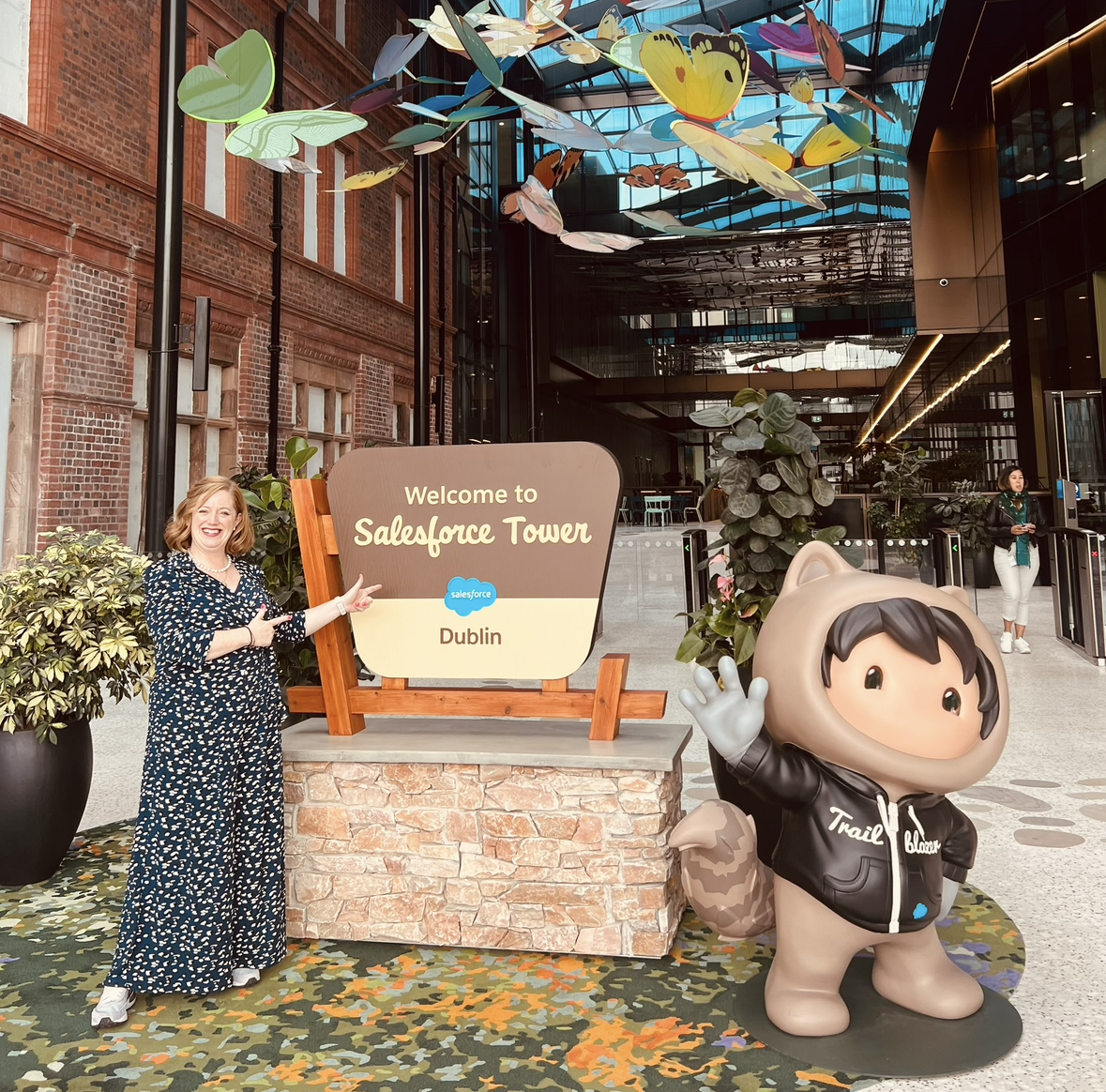
My career took me through different countries, cultures, industries and organisational systems. My final corporate role was EMEA SMB Marketing Director at Salesforce.
My understanding of organisational systems isn't purely academic. I've worked within them, led within them and experienced the discomfort and opportunities of change within them.
The systemic thread running through my own story
My father was a salesman. My mother was a banker and stockbroker. And there I was, the humanities student, seemingly taking a very different path.
Looking back through a systemic lens, I can now recognise what may have been an unconscious loyalty to their commercial way of being.
Perhaps marketing was a way for me to honour my curiosity about humanity while also maintaining a sense of belonging to a family with a strong commercial identity.
It wasn't just my career that was changing.
Alongside those 22 years of building a career, life was happening too.
I lived with endometriosis and underwent six surgeries. I know what it is to navigate a demanding professional life while living with a chronic health condition, carrying things that aren't always visible to the people around you.
At 40, I lost my mother. She was just 71. Bowel cancer took her from us in 16 months.
There was the experience of caring for a dying parent, the grief of losing her and then learning to find my place in a world without her.
My own health journey, the experience of surgical menopause and the loss of my mother were significant life transitions. They didn't happen in isolation from my working life.
These experiences invited me to question my relationship with time, ambition, achievement and success.
What was I working towards? What was I postponing? What did I want the rest of my life to feel like, rather than simply look like?
I know what it is to be professionally successful while navigating deeply personal transitions. To be leading others while trying to find your own way.
Life doesn't neatly separate itself into professional and personal chapters. Everything belongs to the same story.
For many years, my commercial world and my curiosity about humanity sat quite comfortably together.
Until my soul wanted more of the human and less of the commercial.
Perhaps I wasn't changing direction. Perhaps I was coming closer to myself.
In July 2023, at 45, I left corporate life. It was a decision that had been several years in the making.
There have been extraordinary gains and very real costs. Financial uncertainty, freedom, changes in identity, new possibilities, uncomfortable endings and beautiful beginnings.
My own transition has included walking 750 kilometres of the Camino, establishing my own business and continuing to explore what a meaningful life looks like for me.
Today, as a systemic transition coach and family and organisational constellations facilitator, I get to bring those two rich worlds together.
Three perspectives. One integrated approach.
The anthropologist at heart
A lifelong curiosity about people, cultures, human behaviour and the systems we belong to.
The commercial leader
First-hand experience of business, customer behaviour, qualitative research, leadership and organisational change.
The systemic practitioner
Professional training and lived experience of the relationship between family, work, identity, grief and big life transitions.
I understand commercial realities. I understand ambition, targets, leadership, organisational politics and the need to make a living.
I also understand the human longing for meaning, freedom, connection and belonging.
I'm not your typical career coach. I'm interested in the person behind the professional identity, the family behind the individual, and the wider systems that may influence the choices we make.
My work sits at the intersection of life, career and relationship transitions. Because rarely is it just about work.
Sometimes the next chapter of our lives isn't about becoming someone entirely new.
It's about making room for the parts of ourselves that have been there all along.

Understanding midlife transitions
Why are we questioning everything in our 40s and 50s?
Sometimes you haven't just outgrown your job. You've outgrown a version of your life.
Changing career at 40, 45 or 50 rarely happens in isolation. By midlife, we have accumulated decades of experiences, relationships, responsibilities, achievements, losses and disappointments.
Some life transitions are chosen. Others are placed upon us by circumstance. And sometimes they all seem to arrive at once.
In my work as a systemic transition coach, and in my Beyond the Norm podcast, I explore how these seemingly separate experiences can influence one another and change what we want from our lives and careers.
Which of these life transitions are you navigating?
Career and work
Redundancy, restructuring, promotion, changing leadership, the impact of AI, starting a business or outgrowing a career you were once incredibly proud of.
Health and the body
Perimenopause, menopause, chronic illness, surgery, a health diagnosis, changing energy levels or adjusting to a body that feels different from the one you once knew.
Love and relationships
Divorce, separation, the ending of a relationship, becoming single again, beginning a new relationship or experiencing changes in long-standing friendships.
Grief and loss
Losing a parent, a partner, a sibling or a close friend. Grieving not only what has happened but also what hasn't happened, including the experience of being childless by circumstance.
Family and responsibility
Becoming a carer for an ageing or dying parent, supporting children as they leave home, changing family dynamics or being caught between generations who need you.
Identity and belonging
Moving home, relocating, returning to Ireland, changing communities, experiencing loneliness or questioning where and with whom you belong.
Change is cumulative.
It may not be this particular ending that is overwhelming you. It may be the weight of all the endings and changes you've been navigating.
Perhaps you lost a parent, continued working, navigated changes in your health, supported your family and then experienced a redundancy.
Each transition requires something of you. When several happen together, there may be very little space to process one before the next arrives.
Sometimes the emotional impact of a life transition becomes apparent long after the event itself, when you finally have some space to reflect.
Before judging yourself for how you are responding to this particular change, consider everything else you have been carrying.
The loss of identity that accompanies change
One of the least acknowledged aspects of a career transition is the loss of identity.
When you've spent twenty or thirty years becoming a leader, a teacher, a doctor, a marketer or an expert in your field, your work can become deeply intertwined with who you are.
Leaving a job can mean losing far more than a salary. It can mean losing a title, a community, a sense of recognition, a familiar routine and a version of yourself that you spent years becoming.
The same can be true of being a partner, a daughter, a son, a parent or a carer.
When those roles change, we can find ourselves asking questions that go far beyond our careers.
Who am I without this role?
Where do I belong now?
What do I want when I am no longer defined by what others need from me?
Grieving the life we thought we would have
Grief is not exclusive to bereavement. We can also experience grief when a relationship ends, a career disappears, our health changes or a long-held dream does not come to fruition.
Sometimes we are grieving a future we had imagined for ourselves. The family we thought we would have. The career we thought would fulfil us. The relationship we thought would last. The life we thought we would be living by now.
These losses may not always be visible or acknowledged by others, but they can influence how we feel about our work, our relationships and our future.
Even positive life transitions require us to adjust
Getting promoted, getting married, moving into a new home, starting a business or retiring may be things you have actively wanted.
Yet they can also bring uncertainty, changes in identity, additional responsibilities and unexpected feelings of loss.
You can be grateful for a new chapter and still miss aspects of the old one. Both experiences can coexist.
Choosing a transition does not mean you are immune to the discomfort of it.
And what if nothing is visibly wrong?
There is another transition that is rarely named. That quiet, bubbling feeling that something needs to change, even though everything looks perfectly fine on paper.
You might have a successful career, a good salary, a lovely home and people who care about you. Yet something feels missing.
Is this it?
Is this what I've worked so hard for?
Is this how I want to spend the next twenty years of my life?
You don't need to wait for a crisis to explore what you want from your life. Nor do you need to justify wanting something different.
As a systemic transition coach and family and organisational constellations facilitator, I explore career change within the wider context of your life, relationships, family, health and sense of belonging.
Before we decide what needs to change, it helps to acknowledge everything that is already changing.
You are not simply navigating a career transition. You may be navigating a whole new season of your life.
When life transitions happen all at once
How much change have you been carrying?
Before you judge yourself for not knowing what comes next, consider how much you have already been navigating.
In my Beyond the Norm podcast episode, How to Navigate Big Life Transitions, I explore something that I feel we don't acknowledge enough. The cumulative impact of change.
By the time we reach our 40s and 50s, it is not unusual to be navigating several significant life transitions simultaneously.
You could be grieving the loss of a parent, experiencing menopause, caring for family members and questioning whether you want to continue in the career you have spent decades building.
Then a redundancy, a relationship ending or another unexpected change arrives.
And you find yourself wondering why this particular experience is impacting you so much when you have managed to navigate difficult things before.
What is the Holmes and Rahe Life Stress Scale?
In 1967, researchers Thomas Holmes and Richard Rahe developed the Social Readjustment Rating Scale (SRRS), commonly referred to as the Holmes and Rahe Life Stress Scale.
Their research assigned numerical values, known as life change units, to 43 different life events based on the degree of adjustment those events typically required.
What I find particularly interesting about this research is that it recognises both welcome and unwelcome changes. Even the things we actively choose and look forward to can require significant adjustment.
How much adjustment does change ask of us?
Selected events from the original 1967 scale, with their historical life change units.
Source: Holmes, T. H. and Rahe, R. H. (1967). The Social Readjustment Rating Scale. Journal of Psychosomatic Research, 11(2), 213-218. Selected event labels have been adapted for readability. Explore the full life stress inventory.
What happens when several life transitions occur together?
These events do not necessarily arrive neatly spaced apart. One transition can lead to several others.
A relationship ending may also mean moving home, a change in financial circumstances, changes in friendships and a different sense of identity.
A career change may mean saying goodbye to colleagues, losing a familiar routine, adjusting to a different income and reconsidering where you belong.
The original stress scale offers one way to illustrate how the demands of change can accumulate.
Imagine these four transitions happening within a year.
This example illustrates the cumulative nature of change. It is not an individual health assessment or a prediction of illness.
And this doesn't necessarily capture the everyday responsibilities, financial pressures, caring commitments and emotional demands that continue alongside those bigger life events.
One of the limitations of the original scale is that it was developed in 1967. Experiences such as menopause, involuntary childlessness, modern workplace pressures and the uncertainty created by AI are not adequately represented.
More recent researchers have revisited and updated the scale. You can read about that research here.
I share the original scale not to quantify your suffering, compare your experience with someone else's or predict your health, but to offer some perspective on how much adjustment you may be experiencing.
The event may be over. Your adjustment to it may not be.
Sometimes we only begin to feel the full emotional impact of a life transition weeks, months or even years afterwards.
When we are caring for a dying parent, undergoing surgery, navigating a separation or dealing with redundancy, much of our energy can be directed towards getting through the immediate situation.
It may only be when life becomes a little quieter that we begin to recognise what we have lost and how much has changed.
In my systemic work, I often explore the difference between the external event and the internal experience of transition.
Your head may have accepted what has happened. Your heart may still be grieving. Your body may be asking for rest.
Different parts of us can take different amounts of time to adjust.
There is no universal timeline for grief, recovery or finding your feet in a new chapter of your life.
Why this matters when considering career change at 40 or 50
If you are questioning your career while also navigating grief, illness, menopause or a relationship ending, it can help to explore the wider context before making a significant professional decision.
Perhaps a career change is exactly what you need. Perhaps you need recovery, a different working environment, additional support or a little more space to hear yourself think.
You may need several of those things.
There is no assumption in my work that you need to stay where you are or that you need to leave. We explore what is true for you, taking into account your whole life rather than treating your career as a separate system.
A moment of reflection
Take out a journal or a piece of paper and consider these questions from my wider work on life transitions.
- What significant life transitions have I experienced in the past twelve months?
- What earlier changes or endings am I still adjusting to?
- Which of these transitions did I choose, and which were placed upon me?
- What have I lost, including the parts of my identity or future that I had imagined?
- What am I expecting of myself right now?
- If nobody, including myself, was judging me, what else would be true?
- What support do I need that I haven't yet asked for?
You don't have to navigate every transition alone.
Support can take many forms. A conversation with a trusted friend, practical help, time away from work, professional coaching, bereavement support, counselling or a conversation with your GP.
Sometimes the support you need has nothing to do with finding your next job and everything to do with caring for yourself through the changes already taking place.
Systemic coaching and constellations offer a reflective space to explore your experiences, relationships and possible patterns. They are not a substitute for medical care, psychotherapy or specialist mental health support.
If you are experiencing persistent exhaustion, anxiety, low mood, sleep difficulties or other concerning symptoms, please consider speaking with your GP or an appropriate healthcare professional.
Perhaps the question isn't why you haven't moved forward yet. Perhaps it's what you need to feel supported enough to take your next step.
Beyond the Norm Podcast · Free listening resources
Put the kettle on. Let's explore what's next.
You don't need to have everything figured out. Sometimes a different perspective is a good place to begin.
Whether you are considering changing career at 40, 45 or 50, contemplating leaving corporate life or navigating several big life transitions at once, I'd love you to spend a little time with me.
In these two episodes of my Beyond the Norm podcast, I bring together my lived experience, systemic coaching perspectives and reflections on navigating change.
Take me out for a walk, listen over a cup of tea or find a quiet space with your journal.
Life, career and relationship transitions
How to Navigate Big Life Transitions
Five steps for work, love, loss and everything in between.
Are you navigating a big life transition right now? Or perhaps three at once?
In this episode, I explore the significant life transitions we can experience in our 30s, 40s and 50s, and why the cumulative impact of change deserves our attention.
We explore:
- Why life and career transitions rarely happen in isolation.
- The cumulative stress of multiple life changes.
- Grief, endings, changing roles and loss of identity.
- Five steps for navigating big life transitions.
- How to draw strength from those who came before us and ask for support.
- A guided head, heart and gut reflection to help you explore your next step.
Career change and leaving corporate life
Leaving Corporate Well
Because how we attend to our endings matters too.
Leaving a corporate career after twenty or thirty years can be about far more than changing how you earn a living.
It can invite us to reconsider who we are, where we belong, what success means to us and what we want from the rest of our lives.
If you are contemplating leaving corporate life, beginning a different career or exploring self-employment, this episode is an invitation to consider the ending as well as the new beginning.
Having left my own 22-year corporate career at 45, I understand that there can be both extraordinary gains and very real costs to this kind of transition.
This is a particularly relevant episode if you are asking yourself whether to stay in corporate life, leave a well-paid job or create a different relationship with work.
My intention with Beyond the Norm is to share the conversations, perspectives and questions that I wish more of us had access to when navigating significant life and career transitions.
Not to tell you what to do, but to help you explore what might be right for you.